


Cholecystectomy – Gallbladder Removal
A cholecystectomy is the surgical removal of the gallbladder, the organ people often simply call the “gall”. It is the definitive treatment when gallstones cause pain or complications, and it is also performed in some cases of gallbladder polyps.
Today the operation is generally performed with minimally invasive techniques, while the open method with a large incision is being abandoned. Dr. Konstantinidis and his surgical team have many years of experience in robotic gallbladder removal, even through a single 1.5 cm incision in the navel (Single Site technique).

What does the gallbladder do and what changes when it is removed?
The gallbladder is a small, pear-shaped organ under the right side of the liver. It stores and concentrates bile, the digestive fluid produced by the liver, and releases it after meals to help digest fats.
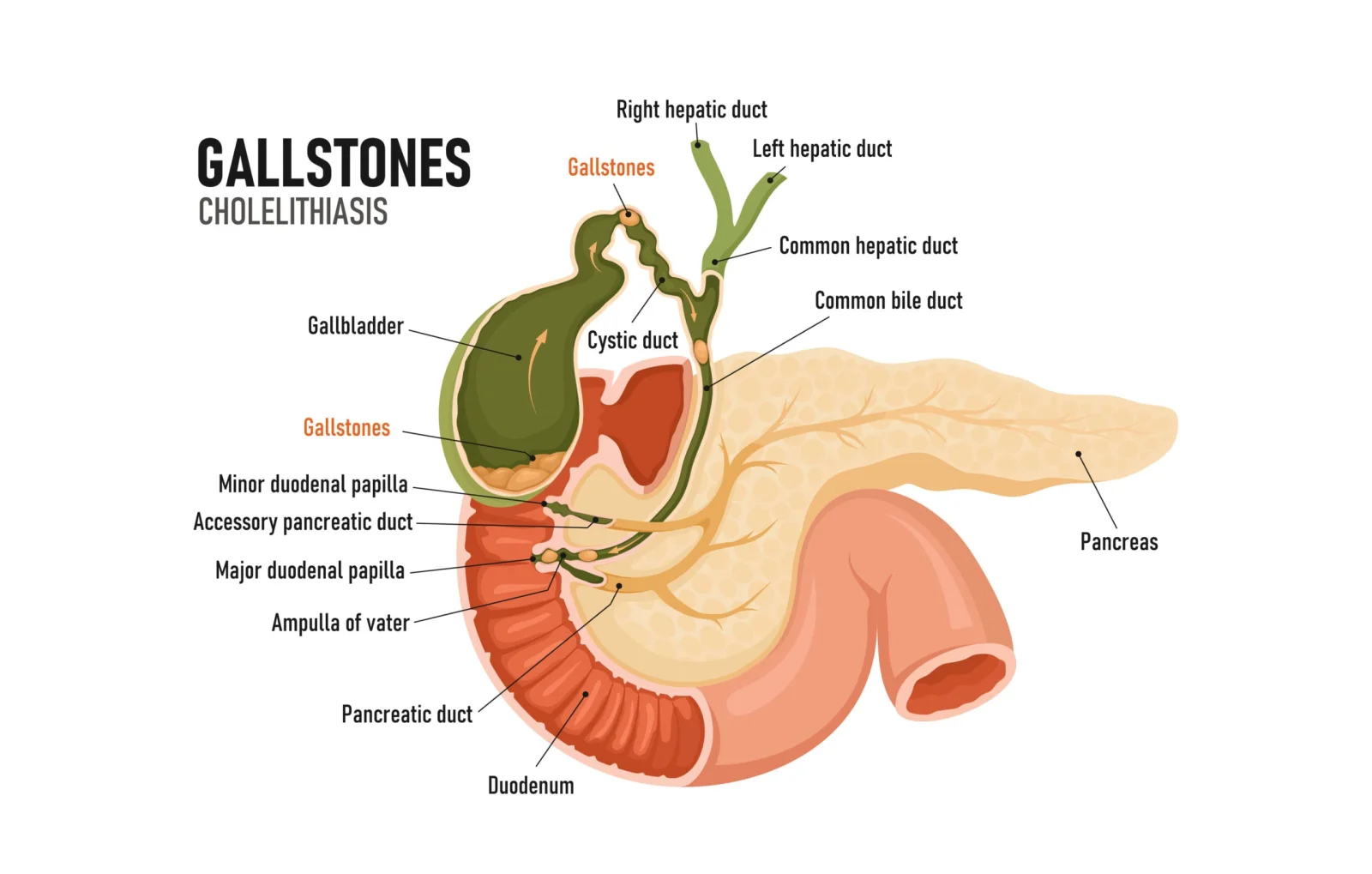
After it is removed, the liver continues to produce bile as normal. The difference is that bile reaches the intestine continuously, instead of being collected and released at mealtimes. The body works normally without the gallbladder, digestion is not affected and no permanent special diet is needed.
Why choose Dr. Konstantinidis?
Dr. K. M. Konstantinidis and his team possess vast experience in the field of laparoscopic and robotic surgery.
Dr. Konstantinidis is the pioneer of Robotic Surgery in Greece and one of the leading figures internationally in the field. He has performed the largest series of General Surgery operations in Europe with the innovative Da Vinci® robotic system.
When is a cholecystectomy needed?
The operation is usually recommended when:
- there are repeated episodes of pain from gallstones (biliary colic),
- inflammation of the gallbladder (cholecystitis) has developed, the most common complication of gallstones,
- a stone has blocked the common bile duct and caused jaundice or pancreatitis,
- there is a polyp with an increased risk, for example larger than 1 centimetre.
To see how simple biliary colic differs from a complication that needs urgent assessment, read which gallstone symptoms show that you need a surgeon.


Which methods are there?
The gallbladder can be removed in three main ways. They differ mainly in the size and number of incisions.
| Method | Incisions | What to know |
|---|---|---|
| Open | One large incision in the abdomen | Being abandoned. Used mainly when removal through small incisions is not possible, for example with very severe inflammation. |
| Laparoscopic | 4 small incisions | The camera (laparoscope) and the surgical instruments pass through the incisions. |
| Robotic through one incision (Single Site) | One 1.5 cm incision in the navel | The surgeon controls the arms of the robotic system from a console. Average duration 40 minutes. |
Laparoscopic method
In laparoscopic cholecystectomy the operation is performed through 4 small incisions. It is often considered a routine operation, but in practice it is demanding. The area of the bile ducts has anatomical features that vary from patient to patient. Complications are rare, but when they happen they can be serious. This is why the surgeon’s experience and a good knowledge of the anatomy of the area matter so much.
Robotic cholecystectomy
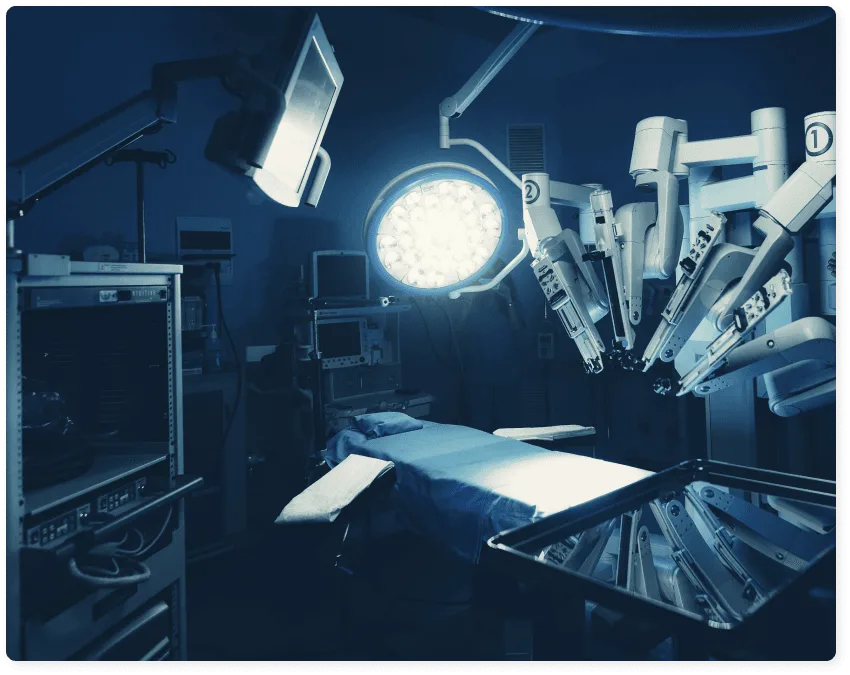
Robotic surgery is an evolution of laparoscopic surgery. From a console, the surgeon directs the arms of the robotic system, which move with greater precision, flexibility and stability than the human hand.
This reduces the risk of unnecessary injury to nearby organs, such as the bile ducts, the liver and the spleen. At the same time, the surgeon can reach even the most difficult anatomical areas, so the operation can be performed through a single small incision in the navel.
For the differences between the two techniques, read in detail the difference between laparoscopic and robotic surgery. A real example is the case study of robotic gallbladder removal with simultaneous treatment of a gynaecological cancer.
Robotic operation through one incision (Single Site)
With the Single Site technique, the whole operation is performed through a single 1.5 cm incision in the navel, using the da Vinci Xi HD robotic system. The average duration of the operation is 40 minutes.
Single-incision surgery is not new. With conventional laparoscopic instruments, however, it is technically difficult, because they all move along the same straight line. In the robotic technique the instruments are flexible and cross at the point of entry, while the system electronically reverses the arms. This keeps the surgeon’s movements comfortable and natural.
For the patient, a single small incision means fewer wound problems after the operation and an excellent cosmetic result. Which technique suits each patient is decided after an assessment by the surgeon.
How is the operation performed?
The operation is performed under general anaesthetic. Carbon dioxide is introduced into the abdomen to create a working space so that the surgeon can see clearly. The gallbladder is then removed together with the stones it contains.
In some cases, for example when the inflammation is very severe, removal through small incisions is not possible and the surgeon converts to an open incision.
What is recovery like?
Recovery after minimally invasive cholecystectomy is much faster than with the open method, but every patient has their own pace. As a guide:
- For the first 24 hours, driving, alcohol and operating machinery are not advised, and you need someone to accompany you at home.
- From the second day, shoulder pain from the gas used in the operation may appear and settles on its own.
- In about one week, light activities and usually driving are allowed.
- In about two weeks, most people return to their usual activities and to work.
- Heavy manual work fully resumes in about three weeks.
Read in detail about recovery after cholecystectomy, phase by phase, with advice on diet, wound care and the signs that mean you should contact your doctor.
What are the possible risks?
Serious complications are rare. As with any operation, however, there are some risks, which depend mainly on the patient’s age and general health:
- wound infection, which is usually treated with antibiotics,
- blood clots in the veins of the legs (deep vein thrombosis),
- injury to the bile ducts or other abdominal organs,
- bile leakage into the abdomen, which needs a further operation if it happens,
- stones left in the bile ducts, which can cause pain or jaundice.
Some patients have indigestion, bloating or diarrhoea for a short time. These symptoms usually improve as the body adjusts.
This text is for information only and does not replace a medical assessment. The instructions of your treating surgeon take precedence, as they are adapted to the details of each case.
Frequently Asked Questions
It is the surgical removal of the gallbladder, which people often call the “gall”. It is performed mainly when gallstones cause pain or complications, such as inflammation, jaundice or pancreatitis, and for certain gallbladder polyps.
The robotic operation through one incision takes 40 minutes on average. The exact time depends on each case.
Yes. The liver continues to produce bile, which goes directly to the intestine. Digestion is not affected and no permanent special diet is needed. In the first few days, light, small meals help.
In the first few days, discomfort at the incisions, bloating and, from the second day, shoulder pain from the gas used in the operation are expected. Some patients have indigestion or diarrhoea for a short time, which usually improves as the body adjusts. Fever, jaundice or pain that gets worse instead of easing need immediate contact with your doctor.
Last updated:
