
Liver Cancer
Liver cancer is a type of malignancy that is difficult to treat, for which the earlier the diagnosis, the better the chances of restoring the patient’s health.
Having the experience of hundreds of surgeries in the liver, Dr. Konstantinidis and his Surgical Team are pioneers in the treatment of liver cancer, being the only ones in Greece that offer the possibility of surgical treatment with the assistance of the state-of-the-art robotic system, da Vinci Xi, at Athens Medical Center.
Thanks to the advanced capabilities of this system, the removal of cancerous tumors is carried out with absolute precision, with excellent oncological outcomes and minimizing the risk of complications.
What is Liver Cancer?
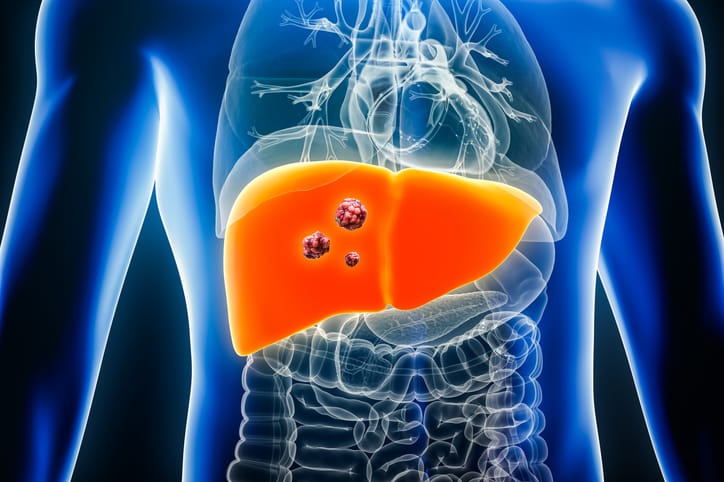
Liver cancer forms in the cells of the liver. Hepatocellular carcinoma is the most common type of liver cancer and occurs most often in people over the age of 65. It accounts for about 85 to 90 in 100 primary liver cancers.
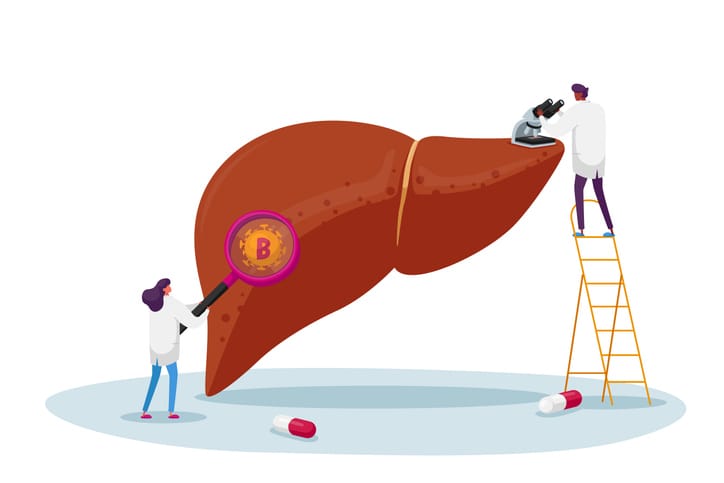
When cancer starts in the liver, it is called primary cancer. Liver cancer is often secondary, that is it appears as a metastasis of malignancies that have appeared in other parts of the body, such as the large intestine or the lungs.
Why choose Dr. Konstantinidis?
Dr. K. M. Konstantinidis and his team possess vast experience in the field of laparoscopic and robotic surgery.
Dr. Konstantinidis is the pioneer of Robotic Surgery in Greece and one of the leading figures internationally in the field. He has performed the largest series of General Surgery operations in Europe with the innovative Da Vinci® robotic system.
What are the symptoms of Liver Cancer?

In its early stages, liver cancer is usually asymptomatic. However, when the first symptoms appear these may include the following:
loss of weight and appetite
nausea and vomiting
fatigue
swelling and pain in the abdomen
jaundice


What are the risk factors for Liver Cancer?
The chances of developing primary liver cancer increase with the following risk factors:
- chronic infection with hepatitis B virus or hepatitis C virus
- cirrhosis of the liver
- diabetes
- fatty liver disease
- exposure to aflatoxins, poisons that sometimes contaminate crops such as cereals and nuts
- excessive alcohol consumption
About 8 in 10 patients with hepatocellular carcinoma already have cirrhosis. For this reason, people with cirrhosis are advised to have a liver ultrasound every 6 months.
How is liver cancer diagnosed?
The diagnosis of liver cancer includes the following:
- a detailed clinical examination by the doctor
- blood tests, to detect a possible increase in tumor markers
- ultrasound, to assess the composition of the liver.
- computed tomography (CT) or magnetic resonance imaging (MRI), to give a more accurate picture of the liver and to detect possible smaller nodules.
- histopathological examination (biopsy), which is performed on a sample of liver tissue in special cases (not routinely)
A second histological examination is performed on the tumor and lymph nodes that are surgically removed to determine the type of the cancer.
How is Liver Cancer Staged?
The extent of the disease and the prognosis for each patient are measured in stages. Depending on the stage of the disease, the appropriate treatment is determined.
The stage is determined (staging) through various tests that are performed to reveal the extent of the cancer and whether it has spread to the rest of the body.
If the cancer is suspected to have metastasized, then further tests are carried out on other organs besides the liver, such as chest CT scan and bone scintigraphy, PET, etc.

Hepatectomy
How is Liver Cancer treated?
The treatment of liver cancer depends on many factors, such as the type and extent of the disease, whether the cancer is metastatic or not, and the general state of health of the patient.
Depending on the case, the treatment plan may include several therapeutic approaches, such as:
- chemotherapy
- radiation therapy
- percutaneous ablation with radiofrequency (RF) or microwaves (MW)
- radioembolization / chemoembolization
However, the first line of treatment for liver cancer is surgical removal of the tumor, which also includes removing part of the organ (hepatectomy). When the remaining liver is healthy, up to 2/3 of the organ can be removed, and the healthy tissue regrows within a few weeks to several months. For a liver transplant due to hepatocellular carcinoma, the Milan criteria call for one tumour up to 5 cm, or 2 to 3 tumours of up to 3 cm each.
Hepatectomy can be performed with open surgery, laparoscopically or robotically.
This is a rather complicated and difficult type of surgery that requires high precision movements, excellent knowledge of the anatomy of the area and extensive experience on the part of the surgeons.
Dr. Konstantinidis and his Surgical Team constitute a reference point for Greece in the treatment of liver cancer, having performed a great number of robotic hepatectomy operations with excellent results.
Laparoscopic Hepatectomy
What is Laparoscopic Hepatectomy?
In cases where the location and the size of the tumor allow, the removal of the latter can be performed with minimally invasive methods of laparoscopic surgery, which do not involve large incisions, as is the case in open surgery.
Laparoscopic hepatectomy offers many benefits for the patient, such as:
- minimal damage to healthy tissues
- less postoperative pain
- shorter hospital stay
- faster recovery and return to everyday activities
- excellent oncological outcomes
- optimal cosmetic outcomes
Robotic Hepatectomy
What is Robotic Hepatectomy?
Robotic surgery is the evolution of laparoscopic surgery and offers unique benefits in the treatment of liver cancer.
Ideally the removal of the cancerous tumor should be carried out with the least possible injury to the neighboring tissues and the smallest possible removal of liver tissue.
This is best achieved, when it is oncologically possible, with the assistance of the Da Vinci Xi, the state-of-the-art robotic system with which Dr. Konstantinidis and his Surgical Team operate at Athens Medical Center.
A successful robotic hepatectomy always starts with a detailed mapping of the area using special radiological tests, which allow for 3D image reconstruction.
These tests are part of a preoperative study, which determines whether the patient will gain an oncological benefit and, if operated on, will have a sufficient liver remnant.
Then, the 3D model results of the radiological tests are integrated into the robot’s computer, allowing the surgeons to superimpose the CT image on the natural image of the patient’s organs.
Thanks to that along with the unparalleled stability of the movements of the robotic arms, an absolute level of accuracy in the surgical incisions is achieved, minimizing the risk of complications that are common in open surgery.
What are the advantages of Robotic Hepatectomy?
The use of the Da Vinci Xi robotic system offers surgeons greater accuracy, stability and control as well as better visibility and access to the surgical field, compared to traditional laparoscopy.
The ergonomic design of the da Vinci Xi robotic system allows surgeons to operate from a comfortable position, sitting in front of a console and enjoying significant benefits such as:
- optimal accuracy and stability of movements
- unparalleled range of motion
- optimal visualization thanks to the magnification of the surgical field
- increased access to areas not accessible with open or standard laparoscopic surgery
- All the advantages of traditional laparoscopic hepatectomy, such as less postoperative pain, faster recovery and return to daily activities
- minimal risk of complications
One of the most important advantages of robotic hepatectomy is the reduced risk of complications, which can be quite serious in such a complex type of surgery.
The robotic tools are small and can be inserted into narrow spaces and positions that are impossible to reach in open and laparoscopic surgery, which are performed with larger tools.
The robot helps ensure that no more damage is caused to the liver than what has already been done by the cancer.
In this way, the least possible injury to healthy tissues is ensured and, accordingly, any risks from the operation, the most serious of which is liver failure, are minimized.
In addition, the patient stands up and walks more quickly, which minimizes the risk of blood clots in the legs and lung infections, and the likelihood of adhesions in the organs and hernias after surgery is significantly lower.
What happens after Robotic Hepatectomy?
Robotic hepatectomy is a minimally invasive method and as such allows the patient to walk on the same day as the surgery or the following day.
However, hospitalization can last several days, as postoperative follow-up is necessary.
Patients remain in the hospital until potential delayed complications are ruled out and liver function is normal.
Depending on the severity of the surgery, hospitalization can range from 2-3 days up to 7-10 days.
Frequently Asked Questions
It depends mainly on the stage at diagnosis, the condition of the rest of the liver (for example, whether there is cirrhosis) and whether the tumor can be removed surgically. Five-year survival is about 37% when the cancer is confined to the liver, 13% when it has spread to nearby tissues or lymph nodes, and about 3% when it has spread to distant organs. These are averages – each patient’s outlook is assessed individually.
Liver cancer is the third leading cause of cancer death worldwide. Mortality is high mainly because it usually causes no symptoms in the early stages, so it is often diagnosed late. When the tumor is found early and removed surgically, the chances of survival are much better.
Metastatic (secondary) liver cancer starts in another organ, often the colon. Its course depends mainly on the original cancer and on whether the metastases can be removed. When the metastases come from colorectal cancer and are removed surgically (hepatectomy), about half of patients live five years or longer after the operation.
Symptoms often appear only at an advanced stage. The most common are jaundice (yellowing of the skin and eyes), a swollen belly from fluid buildup, pain in the upper right abdomen or near the right shoulder blade, weight and appetite loss, nausea or vomiting, itching, fever, and easy bruising or bleeding.
Rarely. Almost all liver cysts are benign (simple cysts) and only about 5% are cancerous. Ultrasound or CT is not always enough to tell, so a suspicious cyst may need a biopsy.
The main blood test is the tumor marker alpha-fetoprotein (AFP). On its own, however, it cannot confirm the diagnosis: it can be normal in people with liver cancer and raised in cirrhosis or chronic hepatitis. That is why it is combined with ultrasound, CT or MRI.
It can be cured, mainly when it is diagnosed at an early stage and the tumor can be removed. The first choice is surgical removal of the tumor (hepatectomy), performed open, laparoscopically or robotically. In selected patients, a liver transplant is performed, with a five-year survival rate of 60–70%, or the tumor is destroyed with radiofrequency or microwave ablation.
Last updated: