


Blog


Gallstones: Which Symptoms Mean You Should See a Surgeon
Gallstones (cholelithiasis) often cause no symptoms at all and are found by chance on an ultrasound scan. The most common symptoms showing that the stones are now causing problems, and that it is worth seeing a surgeon, are pain in the upper right part of the abdomen, often after a fatty meal, together with nausea, bloating or indigestion. Warning signs that need urgent assessment are severe, persistent pain, fever with chills, jaundice (yellowing of the skin or eyes), dark urine and persistent vomiting.
At a glance
- Most people with gallstones that cause no symptoms will never need treatment.
- Biliary colic is felt in the upper right or centre of the abdomen, just below the breastbone, and lasts from several minutes to a few hours.
- Fever with chills, jaundice or pain so severe that you cannot get comfortable need urgent medical attention.
- The main treatment for gallstones that cause symptoms is removal of the gallbladder (cholecystectomy).
Do you recognise any of these symptoms?
What gallstones are and why they form
The gallbladder is a small, pear-shaped organ on the right side of the abdomen, just below the liver. It stores bile, the digestive fluid that is released into the small intestine and helps break down fats. Together with the liver, the pancreas and the bile ducts, it forms a system in which liver, pancreas and bile duct conditions often affect one another.
When the composition of bile changes and its components crystallise, stones of various sizes form, from fine “sludge” (sediment) to stones several millimetres across. This is called cholelithiasis. Stones form mainly when:
- the bile contains more cholesterol than it can dissolve, which leads to cholesterol stones,
- the bile contains a lot of bilirubin, which leads to dark pigment stones,
- the gallbladder does not empty completely or often enough and the bile becomes very concentrated.
It is one of the most common conditions of the digestive system, yet most gallstones remain asymptomatic for years.
Who is more likely to get gallstones
Gallstones are more common in:
- Women, because of hormonal changes (oestrogen), especially during pregnancy.
- People over the age of 40.
- People who are overweight or have a sedentary lifestyle.
- People with a family history of gallstones or with diabetes.
- People whose diet is high in fat and low in fibre.
- People who lose weight very quickly.
Which symptoms point to gallstones
The most typical symptom is biliary colic: pain that starts suddenly, quickly gets worse and can last from several minutes to a few hours. It often comes on after a heavy or fatty meal. These are the most common signs:
Pain in the upper right abdomen
It is felt below the ribs on the right. It can also be felt in the centre of the abdomen, just below the breastbone, in the back between the shoulder blades or in the right shoulder.
Nausea, vomiting and indigestion
Gallstones are often mistaken for simple indigestion or heartburn, because they cause nausea, vomiting and a feeling of heaviness after eating, especially after fatty meals.
Bloating and intolerance of fatty foods
Many patients report persistent bloating, wind and difficulty tolerating heavy or fatty foods, such as fried food or full-fat dairy products.
Pain that does not ease with simple painkillers
When the pain is not relieved by ordinary painkillers or lasts longer than a few hours, you need to be assessed by a doctor, as it may mean that a stone is causing a blockage or inflammation.
Warning signs: when to see a doctor urgently
Some symptoms point to a possible complication, such as inflammation of the gallbladder (cholecystitis), blockage of the common bile duct or pancreatitis, and need urgent medical assessment.
Get medical help urgently if you have:
- Severe pain that stops you getting comfortable or that lasts for hours.
- Fever with chills, a possible sign of inflammation (acute cholecystitis) or infection of the bile ducts.
- Jaundice, meaning yellowing of the skin and the whites of the eyes.
- Dark urine and pale stools, a possible sign of a blocked common bile duct.
- Pain that spreads to the back together with vomiting.
- Persistent vomiting that stops you eating or drinking.
Simple biliary colic
- Pain in the upper right abdomen or below the breastbone
- Lasts from several minutes to a few hours and then eases
- Needs a planned assessment by a surgeon
Possible complication
- Severe pain that does not go away
- Fever with chills, jaundice or dark urine
- Needs urgent assessment in hospital
If you have a combination of severe pain, fever and jaundice, you need to go straight to a hospital emergency department. Acute abdominal pain has many possible causes, from the gallbladder to acute appendicitis, and prompt treatment of a complication such as pancreatitis is crucial. This is why an emergency surgery assessment should not be delayed.
Gallstones without symptoms: what happens when there is no discomfort
Many gallstones are asymptomatic and are found by chance on an ultrasound scan done for another reason. Most people with gallstones that cause no symptoms will never need treatment.
The choice between monitoring and surgery depends on factors such as the size and number of the stones, the presence of a gallbladder polyp, other existing conditions and your medical history. The assessment should be tailored to each person by a surgeon.
How gallstones are diagnosed
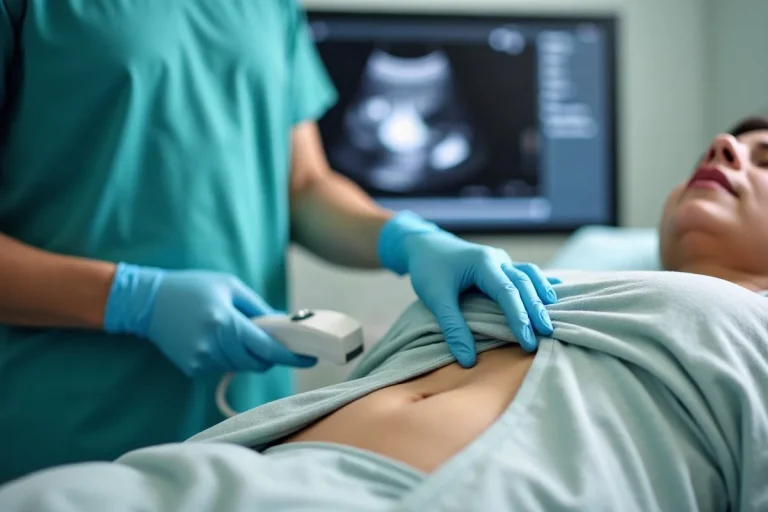
Diagnosing gallstones is simple and painless. The doctor usually uses:
- Upper abdominal ultrasound: the main and most commonly used test for detecting stones.
- Blood tests: to check for inflammation, liver function and a possible blockage, jaundice or pancreatitis.
- Endoscopic ultrasound: can detect smaller stones that do not show up on a standard ultrasound.
- Magnetic resonance cholangiopancreatography (MRCP) or CT scan: in selected cases, when a stone in the bile ducts is suspected.
When gallstones need surgical treatment
When gallstones cause symptoms or complications, the established and definitive treatment is cholecystectomy, meaning removal of the gallbladder, because gallstones often come back. Surgery is usually recommended when:
- There are repeated episodes of pain (biliary colic).
- Inflammation of the gallbladder (cholecystitis) has occurred.
- A stone has caused a blockage or pancreatitis.
- There is also a polyp or other risk factors, at the surgeon’s discretion.
Do I need my gallbladder?
No. The body can work normally without it, and removing it does not affect your ability to digest food. Medicines that dissolve gallstones are rarely used and are mainly intended for people who cannot have surgery: treatment can take months or years, and the stones are likely to come back once it stops.
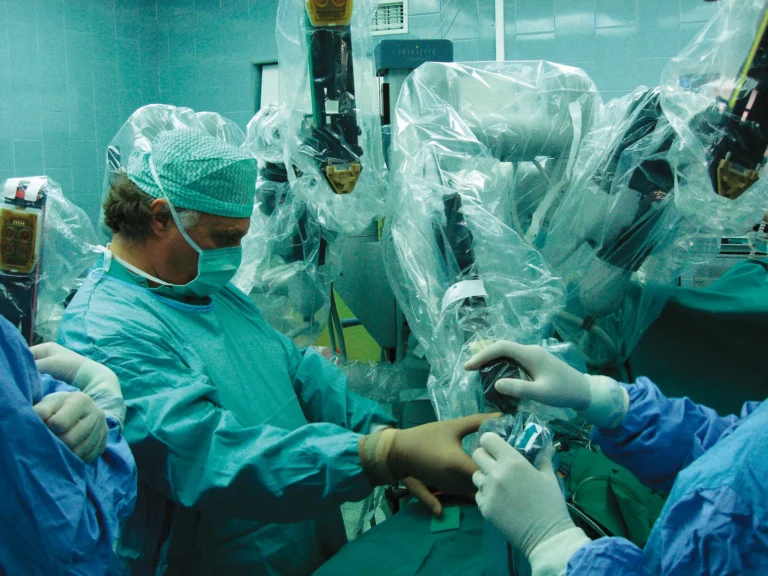
Today the operation is performed with minimally invasive methods, laparoscopic or robotic surgery, which offer small incisions, less pain and faster recovery than open surgery. Dr. Konstantinidis also performs robotic cholecystectomy through a single incision (Single Site technique).
If you would like to find out more, read about the difference between laparoscopic and robotic surgery and a real case study of robotic gallbladder removal. For what happens after the operation, see in detail how recovery progresses after a cholecystectomy.
Frequently asked questions
Where do you feel gallstone pain?
Gallstone pain is usually felt in the upper right part of the abdomen, below the ribs, or in the centre of the abdomen, below the breastbone. It may spread to the back between the shoulder blades or to the right shoulder, and it often comes on after a heavy or fatty meal.
How long does gallbladder pain last, and how does it settle?
A typical episode of biliary colic lasts from several minutes to a few hours and usually eases. Until you are assessed, your doctor can suggest a suitable painkiller. If the pain is very severe, lasts for hours or comes with fever, jaundice or vomiting, you need urgent medical assessment.
Can gallstones go away without surgery?
There are medicines that may dissolve some gallstones, but treatment takes months or years and the stones are likely to come back once it stops. This is why medicines are rarely used, mainly in people who cannot have surgery. The definitive treatment for gallstones that cause symptoms is removal of the gallbladder (cholecystectomy).
What should I eat if I have gallstones?
Until you are seen by a doctor, it helps to avoid fatty, fried and heavy meals, to eat smaller meals without skipping any and to choose foods high in fibre. If you need to lose weight, do it gradually. Diet relieves the symptoms; it does not get rid of the stones.
Should I have my gallbladder removed if the stones cause no symptoms?
Usually not. Most people with gallstones that cause no symptoms never need treatment and are simply monitored. The decision should still be made individually, because some cases, such as large or multiple stones, a polyp or other existing conditions, carry a higher risk of complications.
Can gallstones cause stomach pain?
Yes. Biliary colic is not only felt on the right: it is often felt in the centre of the abdomen, just below the breastbone, where many people think their stomach hurts. This is why it is often mistaken for indigestion or heartburn.

Dr. Konstantinos M. Konstantinidis
General Surgeon · MD, PhD, FACS, MAMSE, FASMBS
Dr. Konstantinidis is the founder of robotic surgery in Greece, where he was the first to use the da Vinci system in 2006, and a pioneer of laparoscopic surgery. In 2011, he was selected as the first surgeon in the world to perform single-incision robotic surgery (Single Site), the technique he also uses for robotic cholecystectomy.
If you recognise any of the symptoms above, a personalised assessment can tell you with confidence whether you need treatment and which option is best for you.
Sources
- Mayo Clinic, Gallstones - Symptoms & causes. https://www.mayoclinic.org/diseases-conditions/gallstones/symptoms-causes/syc-20354214
- Mayo Clinic, Gallstones - Diagnosis & treatment. https://www.mayoclinic.org/diseases-conditions/gallstones/diagnosis-treatment/drc-20354220
- NHS, Gallstones. https://www.nhs.uk/conditions/gallstones/
- NIDDK (NIH), Gallstones. https://www.niddk.nih.gov/health-information/digestive-diseases/gallstones
- Cleveland Clinic, Gallstones. https://my.clevelandclinic.org/health/diseases/7313-gallstones
This article is for information only and does not replace individual medical assessment, diagnosis or treatment. For any symptom, consult your doctor.

Why choose Dr. Konstantinidis?
Dr. K. M. Konstantinidis and his team possess vast experience in the field of laparoscopic and robotic surgery.
Dr. Konstantinidis is the pioneer of Robotic Surgery in Greece and one of the leading figures internationally in the field. He has performed the largest series of General Surgery operations in Europe with the innovative Da Vinci® robotic system.
